Building a custom Management Hub with Supabase, Retool, and WordPress.
The Challenge: The “Software Gap”
Most small businesses reach a point where off-the-shelf software (like booking platforms or CRM) isn’t enough, but enterprise software is too expensive or rigid. This leads to “Data Fragmentation”—important information living in scattered spreadsheets, sticky notes, and the business owner’s head.
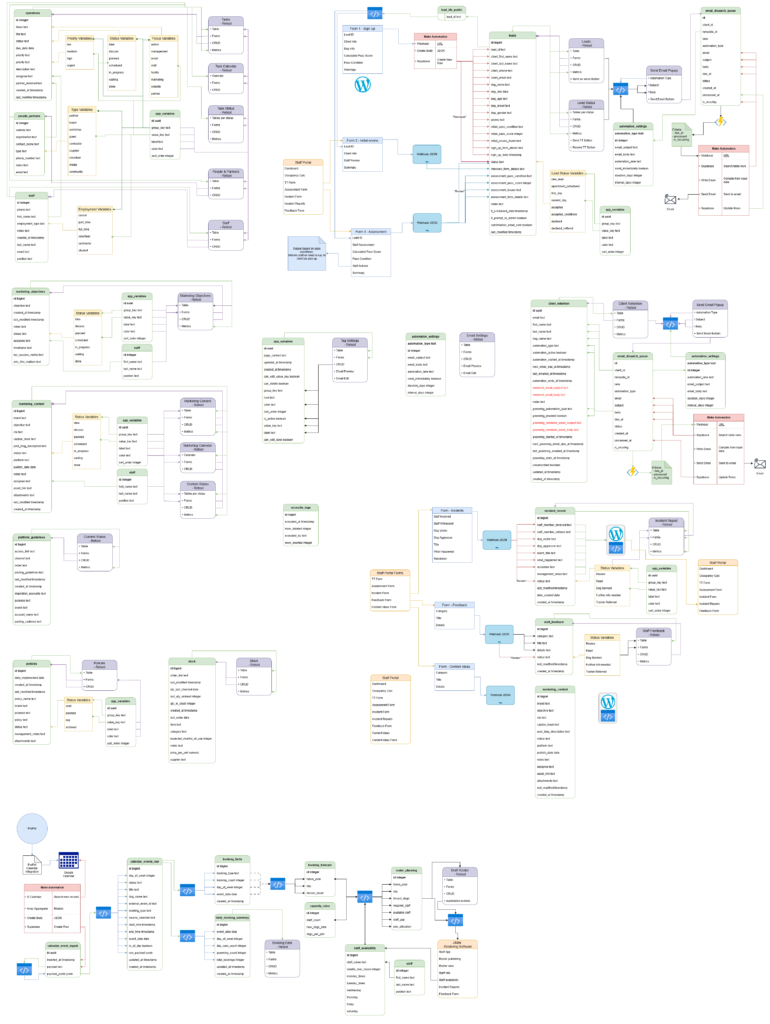
I built the Management Hub to solve this. It’s a vendor-agnostic system designed to sit above a business’s existing tools, acting as a centralized engine for data, automation, and daily execution.
The Architecture (The “Stack”)
To ensure the system was scalable, secure, and fast to develop, I chose a modern “Low-Code/No-Code” hybrid stack:
- Database (The Memory): Supabase (PostgreSQL). Chosen for its real-time capabilities, Row Level Security (RLS), and built-in Edge Functions.
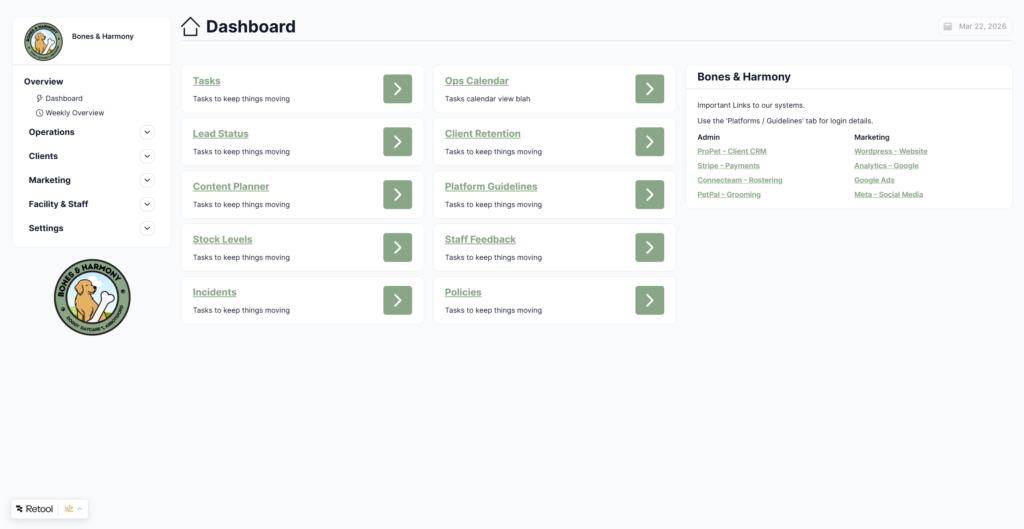
- Interface (The Control Panel): Retool. I used Retool to build a high-utility, action-based UI that staff can use on tablets or desktops with zero friction.
- Automation (The Nervous System): Make.com. Handles the complex “If-This-Then-That” logic between the database and external communication tools (like Email or SMS).
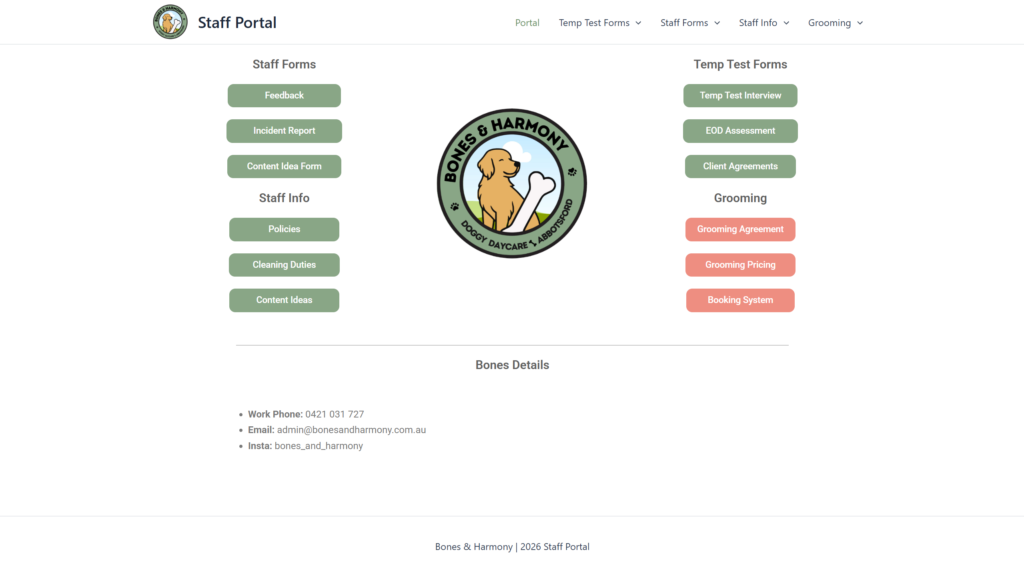
- Public Face: WordPress. Using custom PHP and shortcodes to pull live data from the Hub directly into a staff portal or public website.
Key Functional Pillars
The Hub is broken down into five core modules that I will explore in this series:
- Client Acquisition: A multi-stage automated intake pipeline from lead to “Accepted Client.”
- Facility & Inventory: Real-time tracking of stock levels, maintenance logs, and incident reporting.
- Marketing & Content: A centralized calendar and automated dispatch queue for multi-platform marketing.
- Staff Knowledge Base: A dynamic SOP and Policy portal synced directly to a WordPress site.
- Predictive Analytics (V2): An occupancy projection engine to automate staffing and rostering based on historical trends.
The Objective: “Flow over Friction”
The goal was to create a system where the UI disappears and the flow takes over. By using functional buttons and action-based fields in Retool, staff spend less time “managing data” and more time acting on it.
Retool – Admin Dashboard
WordPress – Staff Dashboard